Pain is one of the most common reasons people explore cannabis products. Whether it's persistent back pain, aching joints after a long day, or discomfort from a chronic condition, many people are looking for alternatives that complement their overall wellness routine.
The growing interest in cannabis isn't simply driven by trends or personal stories. Researchers continue to study cannabis because it interacts with one of the body's most important regulatory networks: the Endocannabinoid System (ECS).
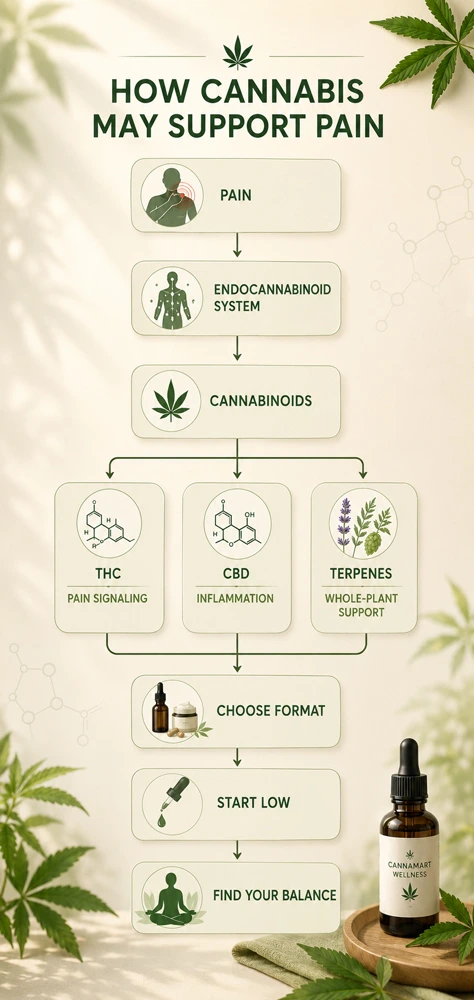
The ECS helps maintain balance throughout the brain, nervous system, immune system and many other tissues. Because pain involves nerve signalling, inflammation and the way the brain interprets discomfort, cannabinoids may influence how pain is processed rather than simply masking symptoms.
THC and CBD: Different Roles in Pain Support
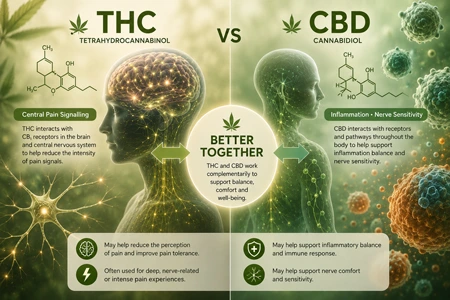
THC (tetrahydrocannabinol) is the cannabinoid most commonly associated with the intoxicating effects of cannabis. From a pain perspective, THC interacts primarily with CB1 receptors in the brain and central nervous system. This interaction may help reduce the intensity of pain signals, particularly for some people living with neuropathic pain or deep musculoskeletal discomfort.
CBD (cannabidiol) works quite differently. It is non-intoxicating and influences several signalling pathways involved in inflammation, immune response and nerve sensitivity. CBD may also help support the body's own endocannabinoids, including anandamide, which plays an important role in discomfort, stress regulation and overall wellbeing.
Rather than one cannabinoid being "better" than the other, they often play complementary roles depending on the individual and the type of pain being experienced.
The Entourage Effect
Cannabis contains far more than just THC and CBD. The plant also produces dozens of minor cannabinoids, aromatic terpenes and naturally occurring flavonoids.
The Entourage Effect describes the theory that these compounds may work together to produce a broader and more balanced effect than isolated cannabinoids alone.
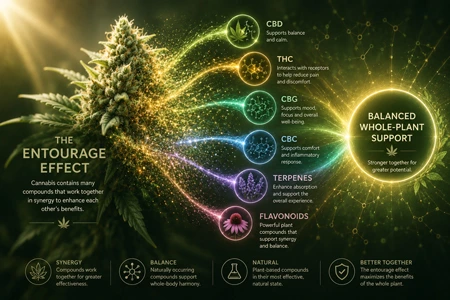
This is why many people choose full-spectrum or broad-spectrum products instead of CBD isolates. A CBD isolate contains only cannabidiol, while full-spectrum formulations retain additional cannabinoids, terpenes and other naturally occurring plant compounds.
That doesn't automatically make one option better than another, but it does highlight the importance of considering the entire formulation rather than focusing on a single ingredient.
Where Cannabis Is Most Often Discussed for Pain
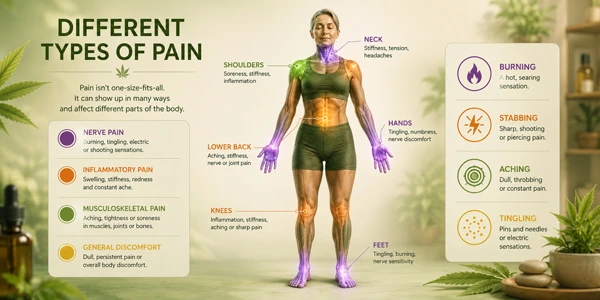
Pain is not a single condition. A pulled muscle, arthritis, sciatica, fibromyalgia and post-operative discomfort all involve different biological pathways.
Current research is particularly focused on chronic pain and neuropathic pain, although results vary between individuals and cannabis should never be viewed as a cure.
Neuropathic pain, often described as burning, shooting, tingling or electric sensation, is one of the areas where cannabis-based medicines are most frequently studied. THC may influence central pain signalling, while CBD may support inflammatory balance and nerve sensitivity.
Fibromyalgia and chronic musculoskeletal pain are also common areas of interest because they often involve widespread discomfort, stiffness, fatigue and disrupted sleep. For some individuals, combining longer-lasting products with topical formulations may provide support for different aspects of their pain-management routine.
Researchers are also investigating cannabis as a possible opioid-sparing tool under medical supervision. This does not mean anyone should replace prescribed medication or reduce opioid use without the guidance of a qualified healthcare professional.
Choosing the Right Product Format
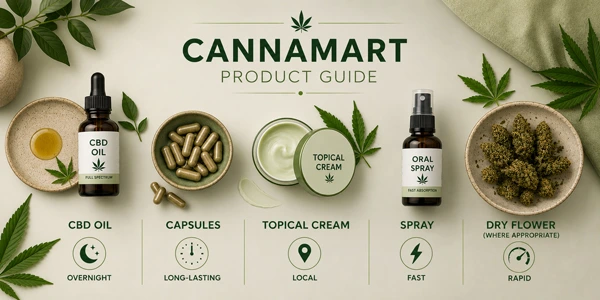
How you take cannabis can influence how quickly it begins working, how long the effects last and how easy it is to adjust your dose.
- Oils, capsules and edibles: Slower onset with longer-lasting effects, making them popular for daily or overnight support.
- Tinctures and oral sprays: Faster onset than edibles with flexible dosing, making them suitable for daytime use.
- Flower or vaporisation: Very rapid onset with a shorter duration, often preferred for sudden flare-ups.
- Topicals: Applied directly to muscles or joints for localised support, generally without intoxicating effects.
Which Product Might Suit Different Pain Goals?
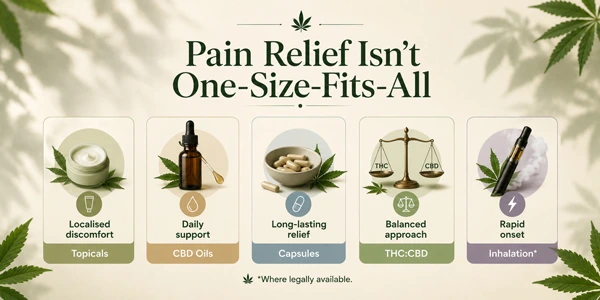
Different cannabis products are designed for different situations, so choosing the right format depends on what kind of support you're looking for.
- Localised muscle or joint discomfort: Topicals such as creams, balms and gels can be applied directly where support is needed.
- All-day or overnight support: CBD oils, capsules and full-spectrum formulations provide a slower onset with longer-lasting effects.
- Flexible daytime support: Tinctures and oral sprays make it easier to adjust your dose throughout the day.
- Rapid support during occasional flare-ups: Inhaled products offer the fastest onset but generally have a shorter duration.
Instead of searching for the strongest product, think about how quickly you want it to work, how long you need the effects to last and which delivery method best suits your lifestyle.
Recommended Product Categories
If you're comparing products, Cannamart offers a variety of formulations designed to suit different preferences and wellness goals, including:
- CBD Oils
- Full-Spectrum Oils
- Balanced THC Products (where available)
- Capsules
- Topicals
- Products for Beginners
Browsing products by category can make it easier to compare cannabinoid ratios, delivery methods and formulations before choosing the option that best aligns with your pain-management goals.
Dosing: Start Low, Go Slow
Cannabis dosing is highly individual. Factors such as age, metabolism, previous cannabis experience, body chemistry, current medication and even whether you've recently eaten can influence how cannabinoids affect you.
The safest approach is to start low, go slow and increase gradually until you find the lowest effective dose.
Many people begin with CBD because it is non-intoxicating and generally well tolerated. If THC is introduced, it is usually done cautiously, starting with very small amounts, often during the evening, while monitoring comfort, sleep, alertness and any unwanted effects.
Terpenes: More Than Aroma
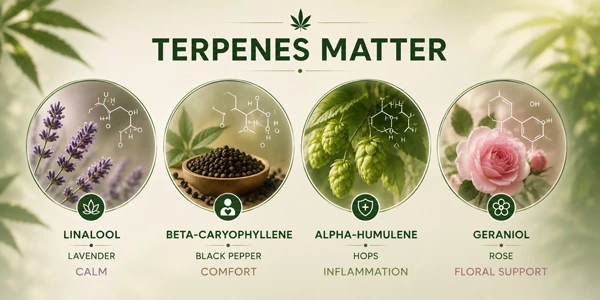
Terpenes are aromatic plant compounds found not only in cannabis but also in lavender, citrus fruits, black pepper and countless other plants.
Compounds such as linalool, beta-caryophyllene, geraniol and alpha-humulene are currently being studied for their potential roles in inflammation, comfort and pain-related pathways.
This is another reason to look beyond potency alone. The strongest product is not necessarily the most suitable one. A thoughtful product choice considers cannabinoid balance, terpene profile, delivery format, laboratory testing, clearly labelled cannabinoid strength (measured in milligrams) and your personal wellness goals. Reading product labels carefully makes it easier to compare formulations and choose products that best suit your needs.
A Note on Professional Guidance
If you're living with chronic pain, taking prescription medication or managing a complex medical condition, it's important to speak with a qualified healthcare professional before introducing cannabis products into your wellness routine. Cannabis may interact with certain medications, and personalised medical guidance can help you make safe and informed decisions.
Final Thoughts
Cannabis is not a miracle cure for pain, and it does not work the same way for everyone. However, it is a remarkably complex plant that interacts with an equally sophisticated system already present within the human body.
Understanding how THC, CBD, terpenes, delivery methods and careful dosing work together helps move the conversation beyond guesswork towards informed, confident decision-making.
At Cannamart, we believe education should always come before expectation. Whether you're exploring CBD oils, balanced THC products, full-spectrum formulations, capsules or topicals, understanding how these products differ empowers you to make better-informed choices. Explore Cannamart's range of cannabis products to compare delivery methods, cannabinoid profiles and formulations that may align with your individual pain-management goals.
Disclaimer: This blog supports responsible cannabis use. The information contained in this article is for educational and informational purposes only and is not intended as health or medical advice. Always consult a physician or other qualified health provider regarding any questions you may have about a medical condition or health objectives.
Our latest content
Check out what's new in our company !